- Frill Free Horticulture
- Garden Bugs
- Syrphid Flies
Jacki Cammidge is a Certified Horticulturist specializing in frugal, low-input gardening and propagation, with lifelong hands-on experience and years as a wholesale nursery head propagator.
Syrphid Flies
The Ubiquitous Hover Fly
These little wasp like bugs are also called hover flies, because that's
what they do, hover over and around flowers and plants.
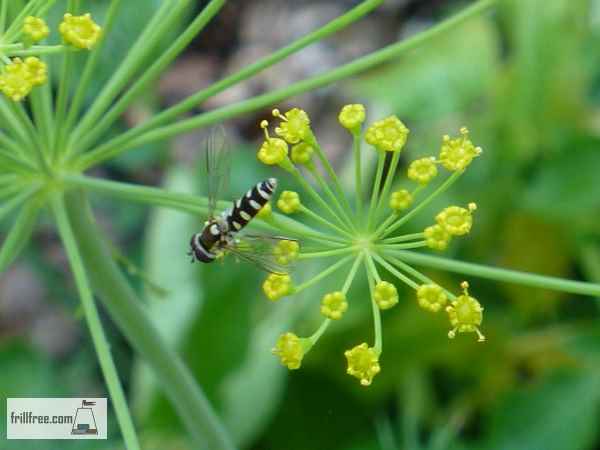
They're
not looking so much for the flower nectar or pollen, although as
adults, they do eat that too, but for pests, like aphids. They lay their eggs nearby
a good pest population so that the tiny larvae have something to eat as
soon as they hatch.
These flies, although they resemble a wasp in coloring, don't sting. They use the resemblance to a wasp as protection from other larger insects that could harm them, like dragonflies and spiders.
You
can entice them to stay in your garden by providing many flowering
plants - don't stop at just flowers; they have a special attraction to
dill and other umbelliferous plants, which is a good thing as dill is
notoriously easy to self seed where it prefers to grow.
Other favorites are parsley, carrots, and parsnips, as they enter the biennial phase of their lives and start to send up long flower stalks. Many beneficial insects love these plants for the nectar, pollen, and other food sources like aphids they contain.
Don't
weed out these kinds of 'weeds' as they perform such a valuable service
in your garden; attracting and nurturing predator populations.
If
you see hover flies in your garden, and you most likely will if you
garden organically, you can rest easy knowing that they are busily
taking care of the pests for you.
You might like these
Bee Friendly Gardening Tips - a guest post
A guest post - Bee Friendly Gardening Tips...
Garden Bugs - pests, predators & prey insects
Pests, predators and prey insects - what are the Bugs in your Garden?
Dragonflies - prehistoric predator insects
Dragonflies are predator insects from prehistoric times with a lot of surprising changes, based on fossil evidence...
 Jacki Cammidge
AUTHOR BIO
Jacki Cammidge is a Certified Horticulturist who helps gardeners grow more with less through low-input, budget-friendly gardening and propagation. She has gardened her whole life, served as head propagator at a wholesale nursery, and handled thousands of rose and juniper cuttings.
Readers can find her at Frill Free on Facebook and Pinterest. Her frill-free approach was forged in northern BC, where horse manure, leaves, salvaged sawdust, and a deer-tested raised bed built her garden from scratch.