Jacki Cammidge is a Certified Horticulturist specializing in frugal, low-input gardening and propagation, with lifelong hands-on experience and years as a wholesale nursery head propagator.
- Frill Free Horticulture
- Recycling In The Garden
- Behind the Sheer Curtain
Behind the Sheer Curtain
I've got a whole box of old sheer curtains rescued from the recycle center, with the full intentions of using them myself in my house - but when I started to pull them out to look at them, I realized they were pretty much past using and somewhat damaged.
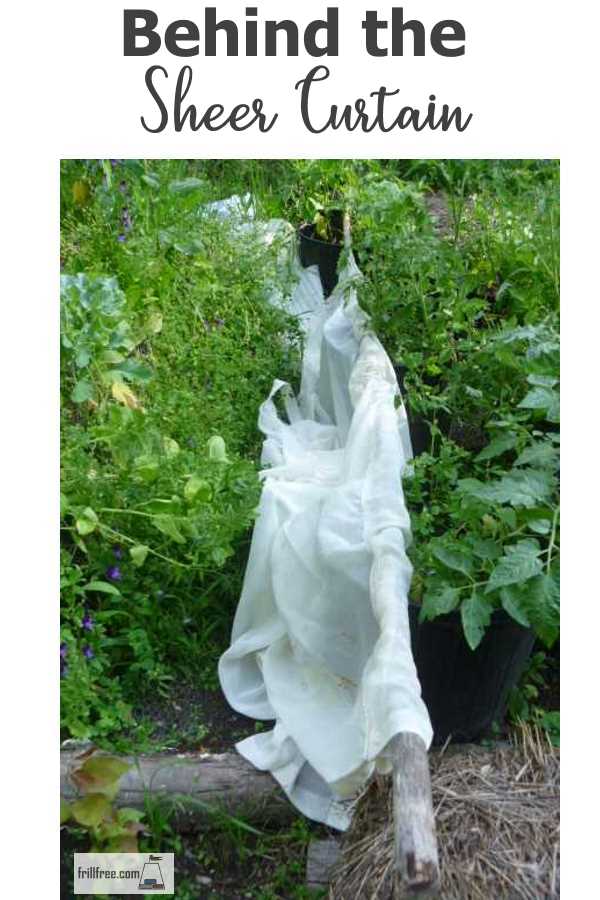
My garden won't care what they look like, and sometimes that much
protection is all your precious plants need to withstand a summer hail
storm, or the risk of frost.
Here's my ingenious way of using them;
As
they all have a large hem, which normally would be on the lower end of
the curtain, I insert a long fairly straight stick into hem, and use
this to hold the end down once it's in place, but also as a handle to
move the curtain around.
You can adjust how much freedom the plants will have, even leaving room for growth, such as over broccoli.
In moments, as a hailstorm threatens, I
can cover my tomato plants which can't take much of that kind of abuse,
or my other plants like delicate lettuce or peas. Just flipping the waiting curtain over tender plants with the long stick takes just a few moments.
Some crops, like potatoes, I don't bother covering as they can rejuvenate quickly after almost complete defoliation.
I
use these sheers on my brassicas too, to prevent those evil white
butterflies from laying their eggs on them, which turn into green
caterpillars that munch holes in the leaves.
So, look in thrift stores for some cheap nylon curtains for your garden; your plants will thank you.
 Jacki Cammidge
AUTHOR BIO
Jacki Cammidge is a Certified Horticulturist who helps gardeners grow more with less through low-input, budget-friendly gardening and propagation. She has gardened her whole life, served as head propagator at a wholesale nursery, and handled thousands of rose and juniper cuttings.
Readers can find her at Frill Free on Facebook and Pinterest. Her frill-free approach was forged in northern BC, where horse manure, leaves, salvaged sawdust, and a deer-tested raised bed built her garden from scratch.