- Frill Free Horticulture
- Growing Ornamental Plants
- Plant Propagation
- How To Make a Mini Propagator
Jacki Cammidge is a Certified Horticulturist specializing in frugal, low-input gardening and propagation, with lifelong hands-on experience and years as a wholesale nursery head propagator.
How To Make a Mini Propagator
For Rooting Cuttings Without Spending a Fortune
I am a participant in the Amazon Services LLC Associates Program, an affiliate advertising program designed to provide a means for me to earn fees by linking to Amazon.com and affiliated sites. Other links on this site may lead to other affiliates that I'm associated with.
Most nurseries and greenhouses have a designated greenhouse specifically for cutting propagation, but most of the rest of us will get by with something a lot smaller to do our propagating.

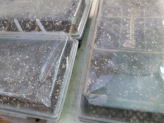
Here's how to make a mini propagator out of a tub and some recycled lettuce containers - so hold onto those greens tubs when you have a salad.
First of all, a few simple rules. Always use sterilized potting soil or other media in your propagator, it's easy to get something in there that won't be beneficial to your cuttings.
In between crops, replace the soil mix with sterilized potting mix or gravel. Pathogens like the dead leaves and other detritus that happens in a moist environment.
Keep in mind that some of your plants might need slightly different conditions, so less humidity or more, drier soil and so on. You can tailor the set up to cater to some of these, as you go along and learn how each kind of cutting responds to the situation.
 A lettuce container makes a great lid for a little propagator for seeds, and cuttings
When watering, also remember that there are no drainage holes, so water will stay where you put it. If it gets too wet, leave the top off to let some water evaporate, or use paper towels to blot some up.
If you used a lettuce container for a lid, it will hold in a lot of moisture, so there's little need to actually add more. Spray a bit of rain water or used the water salvaged from the heat pump or air conditioner.

When ordering these bussing tubs, they come in a package of three or four. Some have lids, which you don't need for this project, so put those aside.
So ideally, you would put an inch of soil mix or perlite or gravel in the tub, and water it, or use a sprayer so you have more control over it. You don't want it soaking, just damp.
Then put the cuttings barely into the soil, and put them close together so they hold each other up.
Leave them alone for at least a week or ten days before you disturb them to check for cuttings.
You might like these
Plant Propagation Station - everything you need for success
Plant Propagation Station - everything you need to grow plants successfully, from seed to cuttings to repotting...
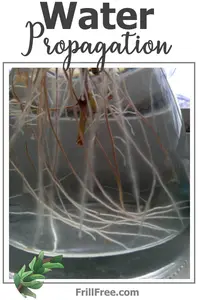
How to use water for propagation
Some plants are so easy to root in a jar of plain water, why wouldn't you use water propagation for growing more plants?
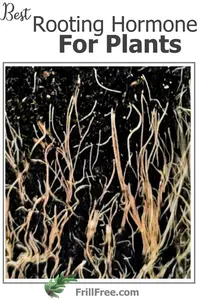
Best Rooting Hormone for Plants: What Works for Each Plant
Learn the best rooting hormone for plants based on cutting type, season, and strength, so you can avoid rot and boost rooting success rates.
 Jacki Cammidge
AUTHOR BIO
Jacki Cammidge is a Certified Horticulturist who helps gardeners grow more with less through low-input, budget-friendly gardening and propagation. She has gardened her whole life, served as head propagator at a wholesale nursery, and handled thousands of rose and juniper cuttings.
Readers can find her at Frill Free on Facebook and Pinterest. Her frill-free approach was forged in northern BC, where horse manure, leaves, salvaged sawdust, and a deer-tested raised bed built her garden from scratch.