- Frill Free Horticulture
- Growing Ornamental Plants
- Water Propagation
Jacki Cammidge is a Certified Horticulturist specializing in frugal, low-input gardening and propagation, with lifelong hands-on experience and years as a wholesale nursery head propagator.
Water Propagation
A Super Easy Method of Making More Plants
One of the easiest methods of making more plants is water propagation. What is it, you ask? This is one of the simplest of all the systems I've come across, let me tell you about it.
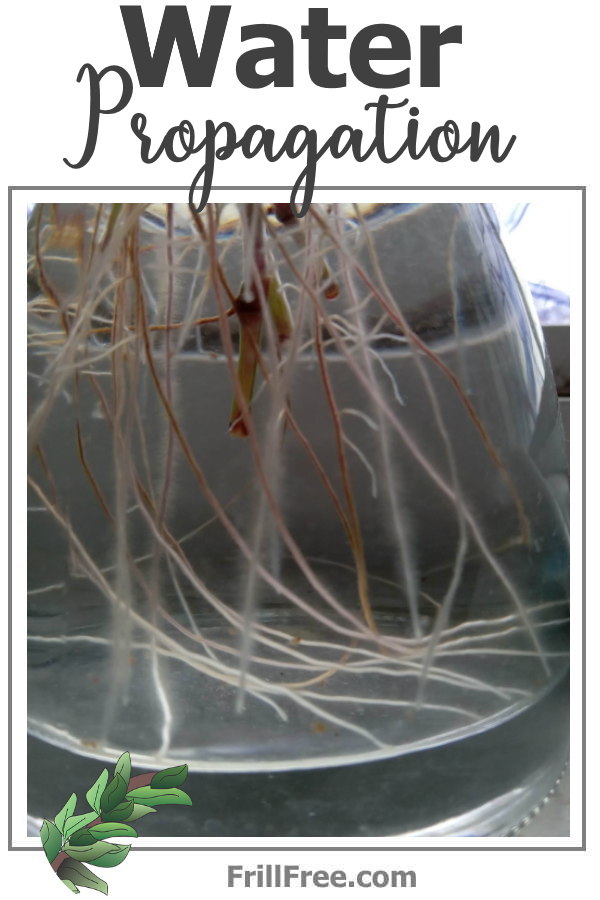
What Kind Of Jars Work Best?
If you have a collection of pretty jars, and no use for them, this is for you. Cut crystal, hand blown or antique glass jars or tumblers make the ideal container, but if you don't have any of those for a display of rooting plants, use what you have.
I scrounge any jar that is tall and straight, mostly so I have more room on my limited window sill.
I prefer a narrow mouth jar, for a couple of reasons. One is that the water doesn't evaporate as quickly, so no need to top it up.
Secondly, it's better to give the cuttings something to hold them upright.
Thirdly, it gives more room for the cuttings to fan out over the jar, so they get more light.
What Plants Root Best in Water?
The best plants for this method include any that show root nodes or even aerial roots, so that would be any of the Pothos clan, which tend to have long danglers or draping growth which can also be trained up on a string or wire. The roots emerge from each leaf node, so cut just below this, and stick in in your jar of water.
Other plants that I've grown very successfully are ivy (straight old Hedera helix, and any of its gorgeous variegated forms), Tradescantia (any and all), Begonia rex, Philodendron and many more.
Streptocarpus and African violets root single leaves this way.
If you're not sure, try it anyway, you could be surprised.
There's no need to use of any kind of hormone, this method is fool proof enough without it for many plants.
How to Use Water For Propagation
The type of water you use for propagation is important. It should be clean, rain water or snow melt is one of the best, or failing that, water salvaged from your heat pump or air conditioning unit.
It might surprise you to know that this type of water is very clean as it's condensed, meaning it's never touched the ground, it's collected out of the air.
If that's not something you have access to, not to worry. The second best water for this is straight out of your kettle. Boiled and cooled tap water is okay, it's still going to have all the minerals that are in the water, but it won't have chlorine which is evaporated out as the water boils.
The temperature is important too. Using well water will be cold, well below room temperature, which is the ideal. So let your rain water, snow salvage, or any outdoor water come to room temperature before you stick your cuttings in.
One of the best ways to save water is to save what you run to get hot or cold water in the kitchen sink. Keep a couple of jars handy to put this in, preferably with a lid on so you don't do what I did and spill it everywhere.
If the cuttings are taking a long time to root, you may need to change the water once in a while.
If you've used clean water as I advise, this might not be a problem, but sometimes algae will start to form. If the water looks cloudy and has a slight green tinge, this will be algae starting to form. Plants generally won't root if this happens, they'll just rot.
Most plants root quickly enough that algae doesn't get a chance to form.
What To Do After They Root
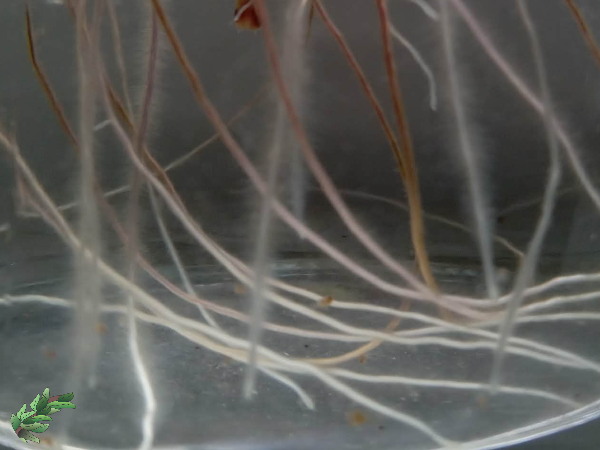 The fast growing roots in water are fragile and easy to snap, so transplant with care
Keeping in mind that the roots from water propagation are a lot softer and more fragile than those in soil, you need to keep the soil you pot them into a lot wetter. This is one time it's okay to overwater for a bit until they adapt to living in soil.
Some plants actually like to grow in water, permanently. Some of the best are Begonia rex, and they live in water quite nicely, with the periodic addition of some water soluble nutrients.
You might like these
Plant Propagation Station - everything you need for success
Plant Propagation Station - everything you need to grow plants successfully, from seed to cuttings to repotting...
Best Rooting Hormone for Plants: What Works for Each Plant
Learn the best rooting hormone for plants based on cutting type, season, and strength, so you can avoid rot and boost rooting success rates.
Cinnamon as a Rooting Hormone - myth or madness?
Can you use Cinnamon as a Rooting Hormone? Why or why not?
 Jacki Cammidge
AUTHOR BIO
Jacki Cammidge is a Certified Horticulturist who helps gardeners grow more with less through low-input, budget-friendly gardening and propagation. She has gardened her whole life, served as head propagator at a wholesale nursery, and handled thousands of rose and juniper cuttings.
Readers can find her at Frill Free on Facebook and Pinterest. Her frill-free approach was forged in northern BC, where horse manure, leaves, salvaged sawdust, and a deer-tested raised bed built her garden from scratch.