- Frill Free Horticulture
- Growing Ornamental Plants
- Watering Tropical Plants
Jacki Cammidge is a Certified Horticulturist specializing in frugal, low-input gardening and propagation, with lifelong hands-on experience and years as a wholesale nursery head propagator.
Watering Tropical Plants
Indoor Tropical Houseplant Watering Checklist
If you're unsure when to water or how much, this checklist will give you the confidence you need. Not all plants are on the same schedule. You can tailor the regimen a little bit by using different types of soil, some with more drainage than others, for specific plants.
Use this checklist each time you care for your indoor tropical plants.
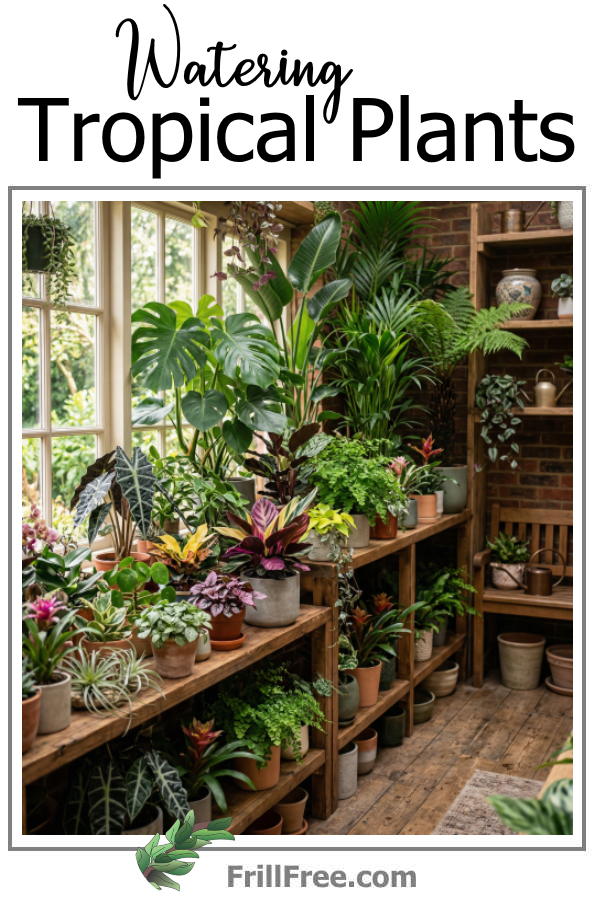
INDOOR WATERING CHECKLIST
1. Check the plant before watering
Look for:
- Drooping leaves
- Yellowing leaves
- Brown crispy edges
- Soft stems
- Mold on soil
- Fungus gnats
- Leaves curling or limp
Important:
Do not water based on looks alone. Many overwatered plants also droop.
2. Check the soil moisture
Use at least one of these methods:
- Stick your finger 1 to 2 inches into the soil
- Insert a chopstick or skewer into the root zone
- Lift the pot to feel if it is light or heavy
- Use a moisture meter as a guide
Water only if the soil is dry enough for that plant’s needs.
3. Match the plant to its watering style
Group your indoor tropicals like this:
Keep more evenly moist:
- Peace lily
- Calathea
- Ferns
- Fittonia
Let the top inch or two dry slightly:
- Monstera
- Philodendron
- Pothos
- Anthurium
- Alocasia
Let soil dry more between waterings:
- ZZ plant
- Snake plant
- Some hoyas
If you are unsure about the plant, check its specific care needs before watering.
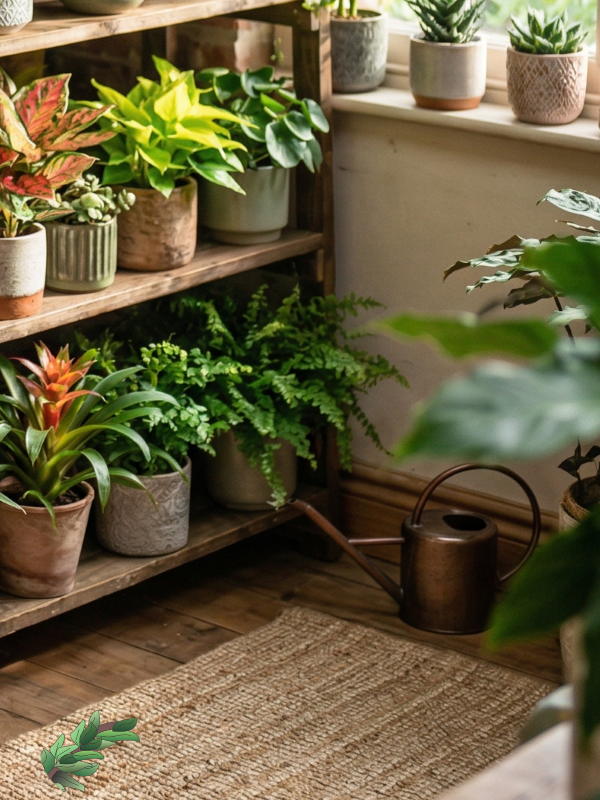 If you want shelves full of happy healthy plants, you need to learn how to water them
4. Check indoor conditions
Indoor watering needs change based on:
- Window light exposure
- Room temperature
- Heating or air conditioning
- Humidity level
- Pot size
- Season
Plants usually need more water when:
- Light is bright
- Rooms are warm
- Air is dry
- The plant is actively growing
Plants usually need less water when:
- Light is lower
- It is winter
- The room is cool
- Growth has slowed
5. Make sure the pot has drainage
Before watering, confirm:
- The pot has drainage holes
- Water can flow out freely
- The saucer is empty before you start
- Decorative outer pots are not holding old water
If there is no drainage, overwatering risk goes way up. See more about how to water a plant in pots and containers.
6. Water slowly and fully
If the plant needs water:
- Use tempered or luke warm water
- Pour water evenly across the soil
- Water slowly so the mix absorbs it
- Continue until water drains out the bottom
- Stop once the root ball is fully moistened
Avoid:
- Tiny splashes on top
- Watering only one side of the pot
- Leaving dry pockets in the soil
7. Let excess water drain completely
After watering:
- Wait a few minutes for drainage
- Empty the saucer
- Empty any decorative cachepot
- Do not let the pot sit in water
This is one of the most important indoor plant habits.
8. Recheck plants in low light
Indoor tropicals in low light dry out more slowly.
Be extra careful with:
- Winter watering
- Plants far from windows
- Large pots with small root systems
Low light plus wet soil is a common cause of root rot indoors.
9. Watch for indoor overwatering warning signs
Signs may include:
- Yellow lower leaves
- Mushy stems or crown
- Wet soil that stays wet for days
- Fungus gnats
- Soil smell that is sour or swampy
- Plant drooping even though the soil is wet
If these appear, do not keep adding water.
10. Watch for indoor underwatering warning signs
Signs may include:
- Crispy brown edges
- Drooping with dry soil
- Soil pulling away from pot edges
- Very light pot
- Slower growth
- Dry, compacted potting mix
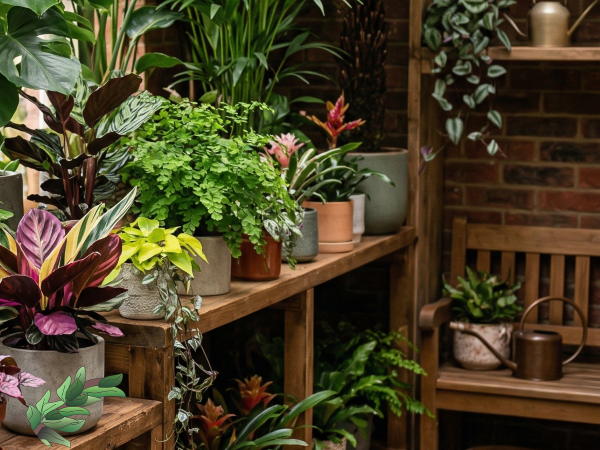 Tropical plants need to be on a schedule for their best growth
11. Use the right indoor potting mix
Good indoor tropical soil should:
- Hold some moisture
- Drain well
- Stay airy around the roots
Helpful mix ingredients:
- Potting soil
- Perlite
- Orchid bark
- Coco coir
If the mix stays soggy too long, watering becomes harder to manage.
12. Create a weekly indoor check routine
Instead of watering all plants on one schedule:
- Check plants 1 to 2 times a week
- Water only the plants that need it
- Group plants by moisture needs
- Keep quick notes for problem plants
This works better than "every Sunday" watering.
QUICK INDOOR WATERING CARD
Before watering, ask:
- What plant is this?
- How dry should its soil be before watering?
- Is the soil actually dry enough now?
- Does the pot drain well?
- Am I watering deeply enough?
- Did I empty excess water afterward?
SIMPLE RULE FOR INDOOR TROPICALS
Check often.
Water thoroughly.
Drain completely.
Do not water again until the plant is ready.
You might like these
Starting a Gardening Business - make money homesteading
Make money with horticulture - by Starting a Gardening Business where you have complete control...
Redo Your Hanging Baskets for a refresh
Redo Your Hanging Baskets for a refresh...
Economy Hanging Baskets - beauty for less, all summer
Economy Hanging Baskets; there is no reason to spend lots of money on baskets and planters...
 Jacki Cammidge
AUTHOR BIO
Jacki Cammidge is a Certified Horticulturist who helps gardeners grow more with less through low-input, budget-friendly gardening and propagation. She has gardened her whole life, served as head propagator at a wholesale nursery, and handled thousands of rose and juniper cuttings.
Readers can find her at Frill Free on Facebook and Pinterest. Her frill-free approach was forged in northern BC, where horse manure, leaves, salvaged sawdust, and a deer-tested raised bed built her garden from scratch.