- Frill Free Horticulture
- Ask The Horticulturist
- Where Do The Roots Come From?
Jacki Cammidge is a Certified Horticulturist specializing in frugal, low-input gardening and propagation, with lifelong hands-on experience and years as a wholesale nursery head propagator.
Where Do The Roots Come From?
Do They Magically Appear?
I was asked this question about a week or two after giving the person several cuttings of different plants. Where do the roots come from? she asked. I thought about it, and this is what I told her.
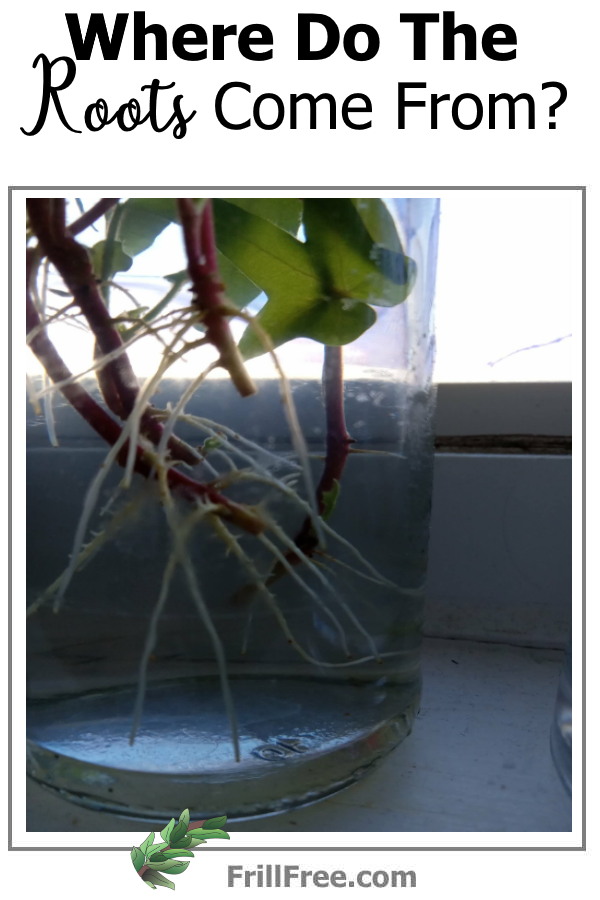
Many plants have adventitious roots in the stems, so when conditions are right, they can push those out. Other plants have nodes in the stem, and that's the only place that can make more roots.
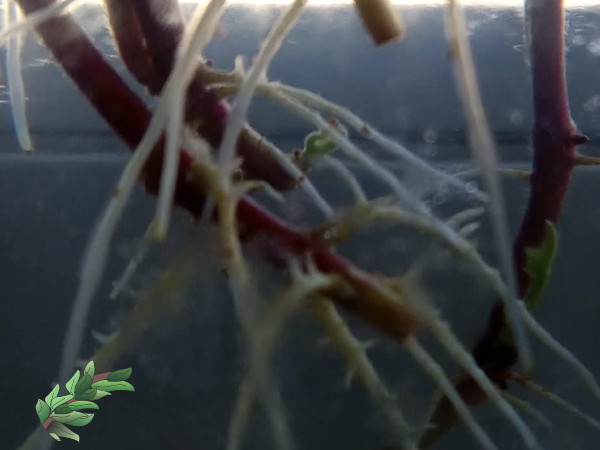 Ivy roots showing where they emerge from the stem
So plants like ivy (Hedera helix) and begonia species like B. rex have many adventitious roots in the stems, and can root anywhere from the stem surface.
Other plants, again Begonia rex, African violet and Streptocarpus also have these kinds of roots in the leaf petioles, so a single leaf can root too, as well as parts of the stem.
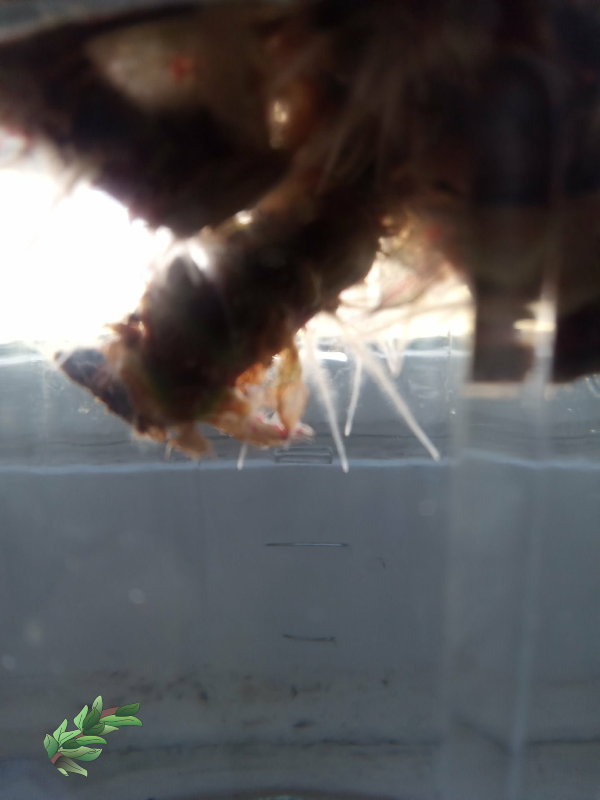 Begonia cuttings in water showing where the roots come from
Many Pothos, Monstera and similar species form roots only on nodes, nowhere else on the stem.
Another thing to watch for is the orientation. I got some Peperomia Hope cuttings, and after setting the cutting, which was a node with both ends on it, on the soil, and one end in the soil, I waited and waited for roots to form.
Finally I took it out and really looked at it and I had it upside down! The node tried to root, but without water from the bottom it really struggled. After I got it right side up, it took off and rooted super fast. Ever since then I make sure if it's a vining plant that it's not upside down.
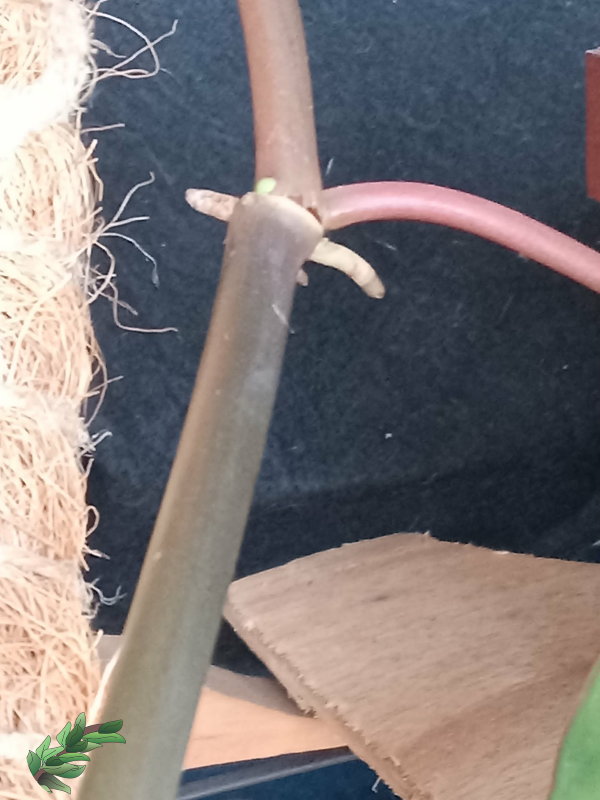 Vining or trailing, make sure you know which way is up
The funny thing was, the cuttings I had given this woman were long, and contained many nodes, which she had cut into pieces, but didn't realize that the stem had to be cut off so the nodes were in contact with the soil. The ends of the stems in between the nodes don't form roots in many cases.
That's why she asked, and we cleared it up. She went on to have a very successful plant propagation journey.
You might like these
Plant Propagation Station - everything you need for success
Plant Propagation Station - everything you need to grow plants successfully, from seed to cuttings to repotting...
How to use water for propagation
Some plants are so easy to root in a jar of plain water, why wouldn't you use water propagation for growing more plants?
Best Rooting Hormone for Plants: What Works for Each Plant
Learn the best rooting hormone for plants based on cutting type, season, and strength, so you can avoid rot and boost rooting success rates.
 Jacki Cammidge
AUTHOR BIO
Jacki Cammidge is a Certified Horticulturist who helps gardeners grow more with less through low-input, budget-friendly gardening and propagation. She has gardened her whole life, served as head propagator at a wholesale nursery, and handled thousands of rose and juniper cuttings.
Readers can find her at Frill Free on Facebook and Pinterest. Her frill-free approach was forged in northern BC, where horse manure, leaves, salvaged sawdust, and a deer-tested raised bed built her garden from scratch.