- Frill Free Horticulture
- Natural Fertilizer
- 10 Best High Nitrogen Natural Fertilizers
- How do I manage organic nitrogen differently in raised beds vs in-ground gardens?
Jacki Cammidge is a Certified Horticulturist specializing in frugal, low-input gardening and propagation, with lifelong hands-on experience and years as a wholesale nursery head propagator.
How do I manage organic nitrogen differently in raised beds vs in-ground gardens?
Let's explore the possibilities here
Organic nitrogen management is similar in principle for both, but raised beds usually need more active monitoring and gentler dosing.
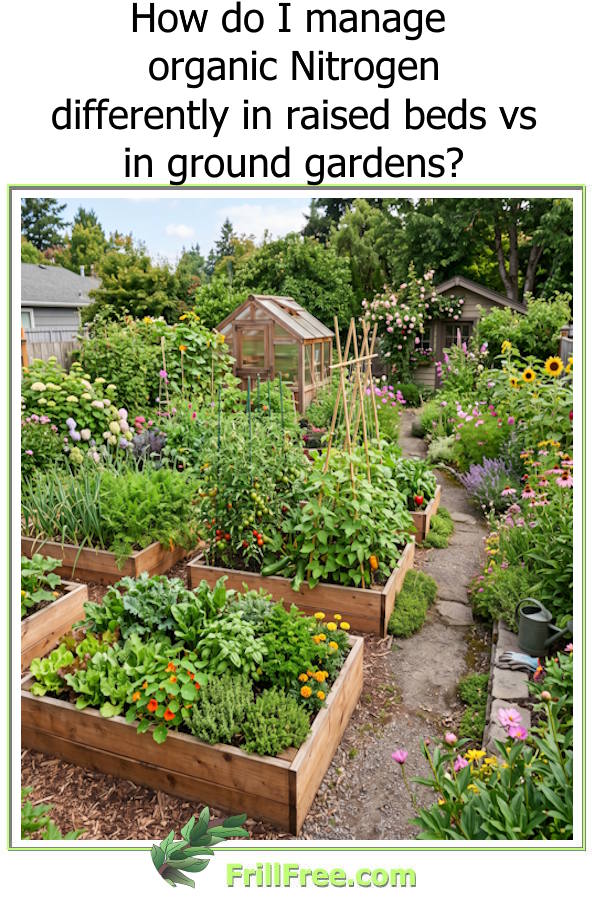
Raised beds
- Nitrogen changes faster because soil volume is smaller, warmer, and often drains better.
- Organic matter decomposes faster, which can release nitrogen faster but also lead to quicker depletion.
- Use smaller, more frequent applications instead of big additions all at once.
- Top-dress with compost, worm castings, blood meal, feather meal, alfalfa meal, or fish-based fertilizers in modest amounts.
- Watch watering closely. Overwatering can move nitrate below the root zone more easily in raised beds, where it is unreachable by the roots.
- Beds with lots of woody material or fresh sawdust can temporarily tie up nitrogen, so extra nitrogen may be needed early on.
In-ground gardens
- Nitrogen tends to buffer better because there is more soil mass and usually more stable moisture and temperature.
- You can often rely more on seasonal compost additions, cover crops, and slower-release organic sources.
- Side-dressing heavy feeders is still helpful, but urgency is often lower than in raised beds.
- Native soil biology and clay or organic matter content may hold nutrients better, depending on the soil.
Best practices for both
- Base additions on crop demand. Leafy greens and corn need more nitrogen than beans and peas.
- Avoid adding too much undecomposed carbon-rich material unless you also account for nitrogen tie-up.
- Use cover crops like clover or vetch when possible.
- Mulch helps moderate moisture and supports steady nutrient cycling.
- If plants are pale or stalled, side-dress with a quicker organic source.
- If growth is lush and floppy with few fruits, back off nitrogen.
A practical rule of thumb
- Raised beds: feed lighter and more often.
- In-ground: feed deeper, slower, and with more reliance on soil-building over time.
Here’s a more practical way to think about it.
Main difference
- Raised beds behave more like large containers than field soil.
- In-ground beds behave more like a reservoir, with more buffering from the surrounding soil.
That means organic nitrogen should usually be managed like this:
- Raised beds: smaller doses, more often, with closer observation.
- In-ground: larger soil-building emphasis, fewer corrective feedings.
Why raised beds need different management
1. Faster nitrogen cycling
Raised beds warm earlier and drain faster, which speeds microbial activity. That can:
- release nitrogen faster,
- use it up faster,
- and sometimes leach it faster after heavy watering or rain.
2. Less buffering
A
raised bed might only have 8–18 inches of amended soil. If crops remove
nitrogen or it leaches, there’s less reserve to draw from than in
native ground soil.
3. More dependence on what you added
Raised
bed mixes often contain compost, peat/coir, bark fines, and imported
topsoil. These can vary a lot in how much nitrogen they supply. Some
mixes are initially rich; others tie up nitrogen if they contain a lot
of woody material.
How to manage organic nitrogen in raised beds
Before planting
- Add finished compost, but don’t assume compost alone will meet all nitrogen needs for heavy feeders.
- If the bed mix is high in wood products, add an organic nitrogen source before planting.
- Good pre-plant sources:
- feather meal,
- blood meal,
- alfalfa meal,
- soybean meal,
- pelletized poultry manure.
During the season
- Side-dress every few weeks for heavy feeders like tomatoes, peppers, squash, corn, brassicas, and leafy greens.
- Use quick-to-medium release sources:
- fish emulsion,
- hydrolyzed fish fertilizer,
- diluted urine if you’re comfortable using it safely,
- blood meal for fast correction,
- feather meal for steadier release.
Application style
- Top-dress lightly and water in.
- Split applications rather than applying a lot at once.
- For leafy crops, frequent light feeding works especially well.
Watch for these raised-bed problems
- Pale leaves after heavy rain or frequent irrigation: likely nitrogen loss or dilution.
- Strong growth early, then sudden slowdown: bed mix may have run out of available nitrogen.
- Yellowing after adding straw, wood chips, or unfinished compost into the root zone: likely nitrogen immobilization.
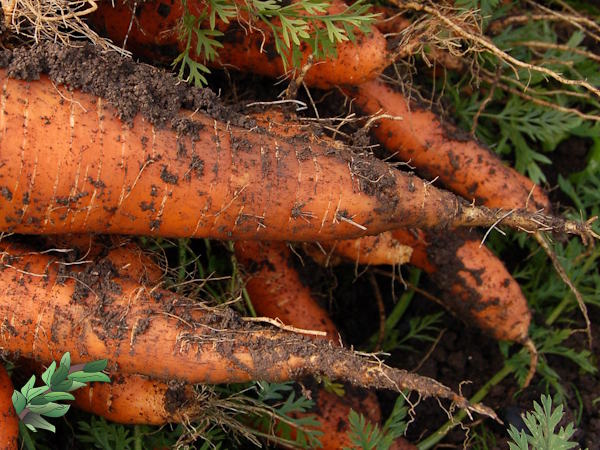 Carrots don't appreciate too much manure, it causes hairy roots, which indicate too much nitrogen.
How to manage organic nitrogen in in-ground gardens
Before planting
- Build long-term fertility with compost, cover crops, and residues.
- Soil organic matter matters more here because native soil can gradually supply nitrogen over time.
- In many in-ground gardens, one pre-plant amendment plus one side-dress may be enough for moderate feeders.
During the season
- Side-dress heavy feeders when they start active vegetative growth or just before peak demand.
- Examples:
- corn: when 8–12 inches tall,
- brassicas: after establishment,
- tomatoes: after fruit set rather than very early,
- leafy greens: after first harvest or thinning.
Why in-ground is different
- More soil mass means slower swings.
- Clay and organic matter may hold ammonium and support steadier nutrient release.
- Root systems can often explore a larger volume of soil.
Best organic nitrogen sources and where they fit
Faster-release
Best when plants already look hungry.
- blood meal
- fish emulsion or fish hydrolysate
- liquid fish/seaweed blends, if they contain meaningful N
- soluble organic fertilizers
Slower, steadier release
Best for pre-plant or long feeding.
- feather meal
- alfalfa meal
- soybean meal
- seed meals
- composted manures
Mostly for long-term soil building
Useful, but often not enough alone for hungry crops.
- finished compost
- leaf mold
- mulches on the surface
- cover crop residues
Special note on compost
Compost is excellent for soil structure, moisture management, and biology, but its nitrogen is mostly slow-release.
It often works better as a foundation than as the only nitrogen source for demanding crops.
Only a fraction of total compost nitrogen becomes plant-available in the first season, depending on compost type and maturity.
A simple side-by-side strategy
Raised beds
- At planting: compost + modest organic N source.
- Midseason: check plants often and side-dress lightly as needed.
- Water carefully to avoid washout.
- Expect to intervene more often.
In-ground
- At planting: compost and/or cover crop incorporation, plus organic N if needed.
- Midseason: side-dress once or twice for heavy feeders.
- Focus more on year-to-year soil organic matter building.
- Expect fewer abrupt swings.
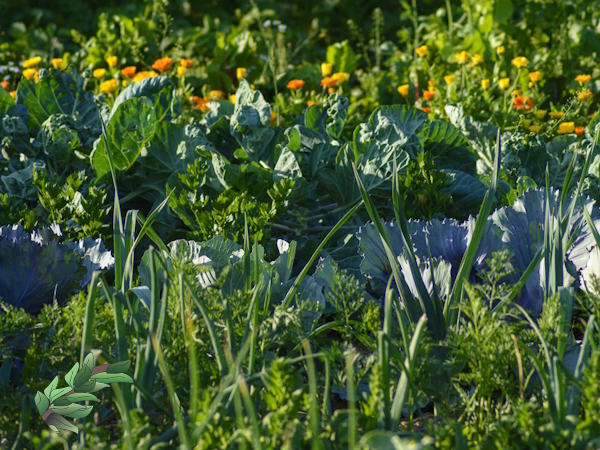 A lush garden with healthy plants growing happily together - a perfect example of good nitrogen control!
Crop-based examples
Leafy greens
- Raised beds: light feeding every 2–3 weeks may help keep growth steady.
- In-ground: one pre-plant feeding and one side-dress is often enough.
Tomatoes
- Raised beds: avoid overfeeding early; add a moderate side-dress after first fruit set if leaves pale or growth slows.
- In-ground: often do well with balanced pre-plant fertility and one later side-dress.
- Too much nitrogen gives excess foliage and fewer fruits in both settings.
Brassicas
- Need steady nitrogen in either system.
- Raised beds often benefit from split applications.
- In-ground beds may handle a larger early application plus one follow-up.
Beans and peas
- Usually need little added nitrogen in either system, especially if inoculated and grown in decent soil.
How to tell whether nitrogen management is working
Too little nitrogen
- older leaves yellow first,
- slow growth,
- small leaves,
- weak regrowth after harvest.
Too much nitrogen
- dark green, lush plants,
- delayed flowering,
- weak stems,
- more pest/disease susceptibility in some crops.
Good habits for both systems
- Keep mulch on the surface, not mixed into the root zone.
- Use cover crops in unused periods.
- Don’t overwater.
- Rotate heavy feeders.
- Test soil if problems repeat.
If this has given you the information you need, all good. If you'd still like some more, there's a pdf for that. Download the free cheat sheet for nitrogen application in the organic garden.
You might like these
Natural Fertilizer - eco-friendly nutrients for organic vertables
If you're growing organic vegetables, you'll need natural fertilizers to keep them healthy...
10 Best High Nitrogen Natural Fertilizers: Quick Results
Skip the guesswork: 10 best high nitrogen natural fertilizers ranked by release speed, availability, and odor—plus what to avoid in the garden.
Chicken Coop Compost - 10 best natural high nitrogen fertilizers
One of the ten best natural high nitrogen fertilizers - Chicken Coop Compost...

 Jacki Cammidge
AUTHOR BIO
Jacki Cammidge is a Certified Horticulturist who helps gardeners grow more with less through low-input, budget-friendly gardening and propagation. She has gardened her whole life, served as head propagator at a wholesale nursery, and handled thousands of rose and juniper cuttings.
Readers can find her at Frill Free on Facebook and Pinterest. Her frill-free approach was forged in northern BC, where horse manure, leaves, salvaged sawdust, and a deer-tested raised bed built her garden from scratch.