- Frill Free Horticulture
- Water for Gardening
- How Often to Water a Plant
Jacki Cammidge is a Certified Horticulturist specializing in frugal, low-input gardening and propagation, with lifelong hands-on experience and years as a wholesale nursery head propagator.
How Often to Water a Plant
Depends on Many Factors
I am a participant in the Amazon Services LLC Associates Program, an affiliate advertising program designed to provide a means for me to earn fees by linking to Amazon.com and affiliated sites. Other links on this site may lead to other affiliates that I'm associated with.
There are no hard and fast rules as to how often to water a plant. It relies on much more than the calendar when to water, and how often.
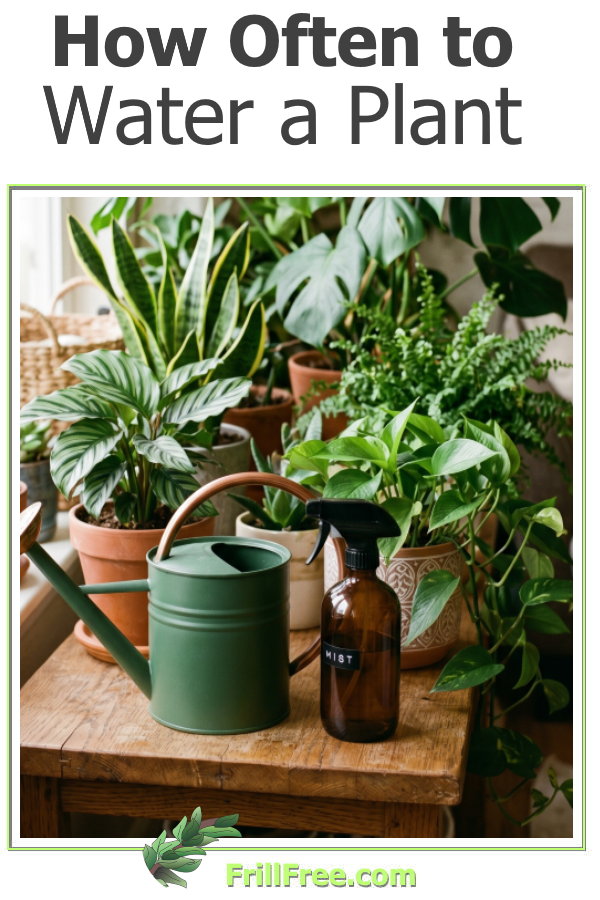
From the soil, and the type of it, and whether it drains quickly or holds moisture, to the humidity or lack of it in the air, to the kind of plant and what stage of growth it's in.
An adult plant can go without watering a lot longer than a tiny seedling with miniature roots.
How often to water a potted plant depends on the plant, the pot, the soil, and the environment, so there isn’t one perfect schedule that fits every case.
In general, potted plants need to be checked more often than plants in the ground because containers dry out faster. A good rule is to water based on the plant’s actual moisture level rather than by the calendar.
How to Check if the Soil is Dry
For many common houseplants, checking the soil every few days is a smart habit. Stick your finger about an inch into the soil.
You can even get a soil moisture meter to tell you when the soil's getting dry.
If it feels dry at that depth, it is usually time to water. If it still feels damp, wait a bit longer. For larger pots, you may want to check a little deeper, around two inches down. This simple method is often more reliable than watering every Monday or every weekend.
If you grow your plants in terracotta clay pots like I do, get used to 'hefting' the pot to check the weight of a watered pot and a dry one.
To do this, simply lift the pot a few centimeters (about half an inch) off the shelf, and see if it feels light. If it does, a bit of water goes into the saucer for it to draw up in a capillary action, or if you water from the top, as much water as it will take without too much pouring out the bottom. Always use a saucer to prevent this from happening.
General Tips for Watering Plants
The type of plant matters a lot. Tropical plants, such as peace lilies or ferns, generally like more consistent moisture and may need watering more frequently.
Succulents and cacti prefer the soil to dry out much more between waterings, so they may only need water every couple of weeks indoors.
Herbs, flowering plants, and vegetables in pots often need more regular attention, especially when actively growing.
Pot size also affects watering frequency. Small pots dry out quickly because they hold less soil and less water. Large pots hold moisture longer.
The pot material matters too. Terracotta pots are porous and allow water to evaporate through the sides, so plants in them often need water more often than plants in plastic or glazed ceramic pots.
Light, temperature, and season also make a big difference. A plant sitting in bright sun, near a heater, or in a warm room will usually need water more often than one in low light or a cool space.
During spring and summer, plants are often growing more actively and using more water. In fall and winter, many plants slow down and need less.
When you do water, water thoroughly. Add water until it runs out of the drainage holes at the bottom of the pot. That helps moisten the full root area and prevents shallow rooting. Then let excess water drain away.
Avoid letting the pot sit in standing water unless it is a plant that specifically likes very wet conditions.
Constantly soggy soil can lead to root rot, which is a common reason potted plants struggle.
A useful sign to watch is the plant itself. Wilting, dry leaf edges, and very light pots can suggest the plant is too dry. Yellowing leaves, mushy stems, fungus gnats, or consistently wet soil can suggest overwatering.
In many cases, overwatering is not about giving too much water at one time, but about watering too often before the soil has had a chance to dry appropriately.
So, instead of asking how often on a fixed schedule, it is better to ask how dry the soil should get before watering.
If you just go by the date or the day of the week to water some plants may just be fine with it, as long as it's not too often. A succulent plant can go months between waterings, so if you forget and only water on the date indicated on the calendar it won't keel over.
That old saying about the best fertilizer is the gardeners shadow comes to mind here too; look at your plants every day, pay attention to what they look like and act (or water) accordingly.
Check regularly, learn your specific plant’s preferences, and adjust as conditions change. That approach usually leads to healthier potted plants than any rigid routine.
You might like these
Starting a Gardening Business - make money homesteading
Make money with horticulture - by Starting a Gardening Business where you have complete control...
Redo Your Hanging Baskets for a refresh
Redo Your Hanging Baskets for a refresh...
Economy Hanging Baskets - beauty for less, all summer
Economy Hanging Baskets; there is no reason to spend lots of money on baskets and planters...
 Jacki Cammidge
AUTHOR BIO
Jacki Cammidge is a Certified Horticulturist who helps gardeners grow more with less through low-input, budget-friendly gardening and propagation. She has gardened her whole life, served as head propagator at a wholesale nursery, and handled thousands of rose and juniper cuttings.
Readers can find her at Frill Free on Facebook and Pinterest. Her frill-free approach was forged in northern BC, where horse manure, leaves, salvaged sawdust, and a deer-tested raised bed built her garden from scratch.