- Frill Free Horticulture
- Growing Ornamental Plants
- Growing a Plant in Water
- Growing a Spider Plant in Water
Jacki Cammidge is a Certified Horticulturist specializing in frugal, low-input gardening and propagation, with lifelong hands-on experience and years as a wholesale nursery head propagator.
Growing a Spider Plant in Water
More Than Just Propagating
I am a participant in the Amazon Services LLC Associates Program, an affiliate advertising program designed to provide a means for me to earn fees by linking to Amazon.com and affiliated sites. Other links on this site may lead to other affiliates that I'm associated with.
Spider plants are known for being easy to grow, so why not grow one in water for an easy party trick?
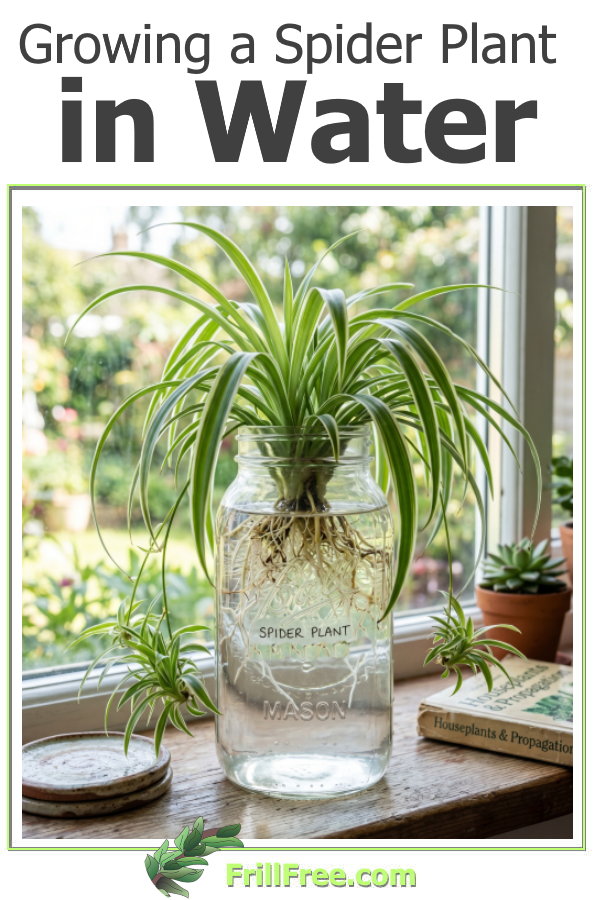
If you like these stripy white and green plants in the lily family, you'll love finding ways to grow even more of them. They form lots of pups on long dangling stems, so you'll have a lot of material to play with.
Spider plants are one of the easiest houseplants to grow in water, which makes them a great choice for beginners or anyone who wants a low-mess, decorative indoor plant.
In addition to all those benefits they are also known to remove certain chemicals from the air, predominately formaldehyde.
The best candidates are the baby plants, often called "spiderettes", that grow on long stems from a mature mother plant. These little offsets root easily and adapt well to life in a jar, glass, or vase.
To get started, choose a healthy spiderette with a small cluster of root bumps or tiny starter roots at its base. Using clean scissors, cut it from the parent plant.
Place the base of the baby plant in a container filled with water, making sure the leaves stay above the waterline. Only the root area should be submerged.
A narrow-necked bottle or small glass can help hold the plant in place and prevent the crown from sitting too deep, which can lead to rot.
Use room-temperature water if possible. If your tap water is heavily chlorinated or contains lots of minerals, let it sit out overnight before using it, or use filtered water.
Put the container in bright, indirect light.
Spider plants enjoy good light, but direct sun can overheat the water and scorch the leaves, especially in glass containers. A spot near an east-facing window or a few feet back from a bright south- or west-facing window usually works well.
Within a week or two, you should begin to see roots lengthening. Once roots are established, ongoing care is simple.
Change the water regularly, about once a week, to keep it fresh and oxygenated. Rinse the container if you notice any slime or algae buildup. Clean water is the key to preventing odor, rot, and bacterial problems. If a root turns mushy or brown, trim it away with sterile scissors.
A spider plant can live in water for quite a while, but it will do best if you provide some nutrients.
Plain water contains no fertilizer, so after the plant has rooted, you can add a very diluted liquid houseplant fertilizer occasionally - far weaker than the label recommends.
Too much fertilizer can damage water-grown roots, so less is definitely more. If you prefer, you can simply enjoy it in water temporarily and later transfer it to soil for longer-term growth.
Keep an eye on leaf tips. Brown tips may be caused by mineral buildup, inconsistent care, or fluoride and salts in tap water. Switching to filtered or distilled water may help.
Yellowing leaves can suggest too much sun, stagnant water, or early rot around the crown. As with most plant problems, checking roots and refreshing the water are good first steps.
One nice thing about growing spider plants in water is that it lets you watch the roots develop, which makes the plant both a decoration and a conversation piece. Clear glass containers show off the root system beautifully, though opaque containers may reduce algae growth.
If you want the plant to stay in water long term, choose a larger vessel as it grows and continue feeding very lightly.
Overall, growing a spider plant in water is easy, attractive, and satisfying. Start with a healthy baby plant, keep the water clean, provide bright indirect light, and avoid overfeeding. With just a little attention, you can enjoy a fresh green plant and a fascinating display of living roots.
Hope you'll find your next challenge at the end of a dangly stem with a spider plant pup and try growing it in water.
You might like these
Starting a Gardening Business - make money homesteading
Make money with horticulture - by Starting a Gardening Business where you have complete control...
Redo Your Hanging Baskets for a refresh
Redo Your Hanging Baskets for a refresh...
Economy Hanging Baskets - beauty for less, all summer
Economy Hanging Baskets; there is no reason to spend lots of money on baskets and planters...
 Jacki Cammidge
AUTHOR BIO
Jacki Cammidge is a Certified Horticulturist who helps gardeners grow more with less through low-input, budget-friendly gardening and propagation. She has gardened her whole life, served as head propagator at a wholesale nursery, and handled thousands of rose and juniper cuttings.
Readers can find her at Frill Free on Facebook and Pinterest. Her frill-free approach was forged in northern BC, where horse manure, leaves, salvaged sawdust, and a deer-tested raised bed built her garden from scratch.