- Frill Free Horticulture
- Water for Gardening
- Growing a Plant in Water
Jacki Cammidge is a Certified Horticulturist specializing in frugal, low-input gardening and propagation, with lifelong hands-on experience and years as a wholesale nursery head propagator.
Growing a Plant in Water
What, Like Hydroponics?
I am a participant in the Amazon Services LLC Associates Program, an affiliate advertising program designed to provide a means for me to earn fees by linking to Amazon.com and affiliated sites. Other links on this site may lead to other affiliates that I'm associated with.
Certain plants like growing in water, and you'd be surprised which ones. Some grow exactly the right kind of roots, and seem really happy and healthy to grow in a jam jar full of H2O.
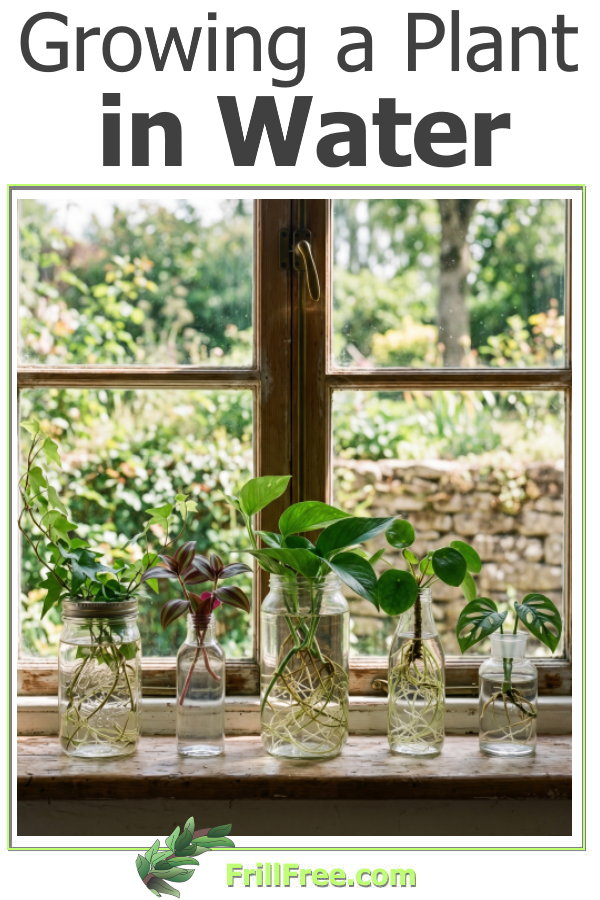
Growing a plant in water is a simple, satisfying way to enjoy greenery without dealing with soil. This method is often called water propagation or hydroponic growing, depending on whether you are rooting a cutting or growing a plant long-term in water.
Many common houseplants can adapt well to it, including pothos, philodendron, begonia, lucky bamboo, some herbs like mint and basil, and certain spider plant babies.
The basic idea is straightforward: the plant’s roots dangle in water, where they absorb moisture and dissolved nutrients. If you are starting from a cutting, choose a healthy stem with at least one node, since roots usually grow from that point.
Remove any leaves that would sit below the waterline, because submerged leaves can rot and foul the water. Place the cutting in a clean jar, glass, or vase filled with room-temperature water, making sure the node is underwater but most leaves stay above it.
Light matters a lot. Most plants grown in water do best in bright, indirect light.
Too much direct sun can overheat the container, encourage algae growth, and stress the plant. Too little light can slow root development and weaken growth. A spot near a bright window, but not in harsh afternoon sun, is often ideal.
Water quality also affects success. Tap water is often fine, but if your water is heavily chlorinated or very hard, plants may do better with filtered water or water left out overnight so some chlorine can dissipate.
The water should be changed regularly, usually every week or two. Fresh water helps supply oxygen to the roots and reduces bacteria buildup. Cleaning the container occasionally is also important, since slime or algae can develop over time.
One thing people sometimes miss is nutrition. A cutting can root in plain water for quite a while, but a plant kept in water long-term usually needs nutrients to keep growing well.
In soil, plants obtain minerals from the potting mix. In water, you may need to add a diluted liquid fertilizer or a hydroponic nutrient solution occasionally. It is best to use a weak dose, because too much fertilizer can damage delicate water roots.
Not every plant thrives in water forever. Some plants root easily in water but eventually do better when moved to soil.
Others can live in water for months or even years with proper care. Water-grown roots are often different from soil-grown roots, so if you later transplant the plant into soil, it may need time to adjust.
There are a few advantages to growing plants in water. It is neat, attractive, and allows you to watch root growth up close.
It can also reduce mess and make it easier to spot root health problems. On the other hand, water-grown plants can be more sensitive to neglect, poor oxygen levels, and nutrient deficiencies.
Overall, growing a plant in water is an easy and enjoyable project for beginners and experienced plant lovers alike. With a clean container, fresh water, enough light, and a little patience, you can create a healthy indoor plant display while learning more about how plants grow.
If you've wondered if you could grow a Begonia rex, for example, for its whole life in a jar, you have my permission to try it.
You might like these
Starting a Gardening Business - make money homesteading
Make money with horticulture - by Starting a Gardening Business where you have complete control...
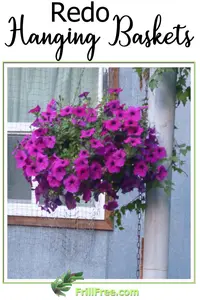
Redo Your Hanging Baskets for a refresh
Redo Your Hanging Baskets for a refresh...
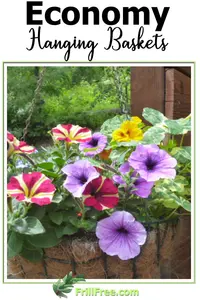
Economy Hanging Baskets - beauty for less, all summer
Economy Hanging Baskets; there is no reason to spend lots of money on baskets and planters...
 Jacki Cammidge
AUTHOR BIO
Jacki Cammidge is a Certified Horticulturist who helps gardeners grow more with less through low-input, budget-friendly gardening and propagation. She has gardened her whole life, served as head propagator at a wholesale nursery, and handled thousands of rose and juniper cuttings.
Readers can find her at Frill Free on Facebook and Pinterest. Her frill-free approach was forged in northern BC, where horse manure, leaves, salvaged sawdust, and a deer-tested raised bed built her garden from scratch.