- Frill Free Horticulture
- Seed Planting
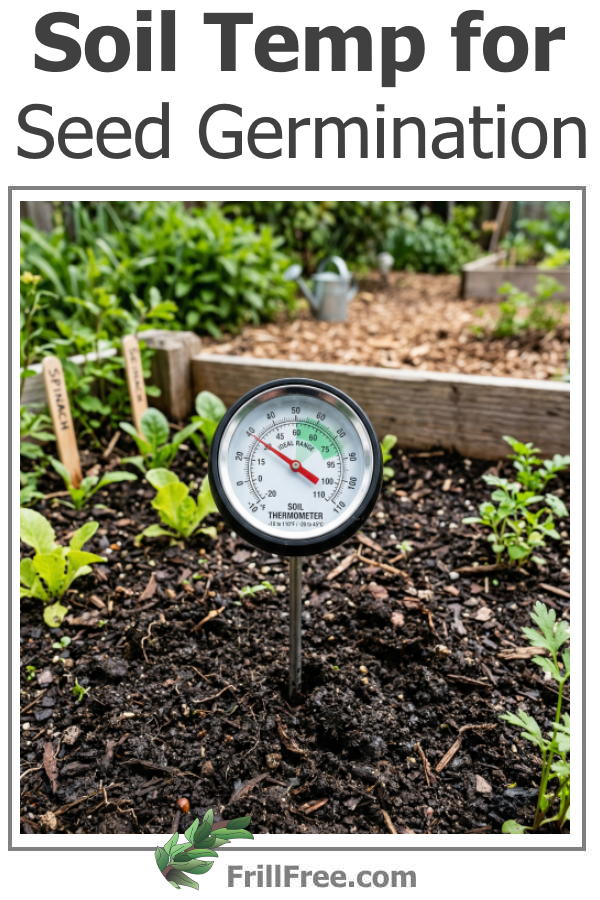
- Soil Temp for Seed Germination
Jacki Cammidge is a Certified Horticulturist specializing in frugal, low-input gardening and propagation, with lifelong hands-on experience and years as a wholesale nursery head propagator.
Soil Temp For Seed Planting
Out of all The Factors, This is One to Get Right For The Plants You're Growing
I am a participant in the Amazon Services LLC Associates Program, an affiliate advertising program designed to provide a means for me to earn fees by linking to Amazon.com and affiliated sites. Other links on this site may lead to other affiliates that I'm associated with.
Best soil temperature for germination for different crops varies according to their needs. Warm weather plants, like tomatoes or peppers, require a lot warmer soil than something in the brassica family, or peas which prefer it much cooler.
Growing plants from seed indoors to get the seedlings to a good size to transplant outside when the weather warms will mean getting a few supplies.
Your soil mix, of course, and a watering can or sprayer to start, and one thing in addition; a soil thermometer so you can figure out what the seeds really need to germinate, as well as using it to tell you the soil temperature outside in the garden.
Air temperature and soil temperature are two different things. It will take the soil a lot longer to heat up than a few warm days.
If it's still chilly at night then the soil will also remain cool, too cool to plant out many seeds. The problem is that in cooler soil temperatures the seed will rot.
Here’s a simple planting guide by crop and season, based on soil temperature for germination.
Cool-season crops
Plant when soil is 40–75°F
Best for early spring or fall
- Lettuce: plant at 40°F+, best at 60–75°F
- Spinach: plant at 35°F+, best at 45–75°F
- Peas: plant at 40°F+, best at 45–75°F
- Radishes: plant at 40°F+, best at 50–85°F
- Carrots: plant at 45°F+, best at 55–75°F
- Beets: plant at 45°F+, best at 50–85°F
- Kale: plant at 40°F+, best at 45–85°F
- Cabbage: plant at 40°F+, best at 50–85°F
- Broccoli: plant at 40°F+, best at 50–85°F
- Cauliflower: plant at 40°F+, best at 50–85°F
- Onions: plant at 35°F+, best at 55–75°F
- Parsley: plant at 40°F+, best at 50–70°F
- Cilantro: plant at 40°F+, best at 50–75°F
- Dill: plant at 40°F+, best at 60–70°F
Warm-season crops
Plant when soil is 60–95°F
Best for late spring to summer
- Tomatoes: plant at 50°F+, best at 70–85°F
- Peppers: plant at 60°F+, best at 75–85°F
- Eggplant: plant at 60°F+, best at 75–90°F
- Beans: plant at 60°F+, best at 70–85°F
- Corn: plant at 50°F+, best at 65–85°F
- Cucumbers: plant at 60°F+, best at 70–95°F
- Squash: plant at 60°F+, best at 70–95°F
- Pumpkins: plant at 60°F+, best at 70–95°F
- Melons: plant at 65°F+, best at 80–95°F
- Okra: plant at 65°F+, best at 80–95°F
- Basil: plant at 60°F+, best at 70–85°F
Simple season rule
- Early spring: peas, spinach, lettuce, onions, radishes
- Mid-spring: carrots, beets, broccoli, cabbage, kale
- After frost and warm soil: beans, corn, cucumbers, squash
- When soil is fully warm: tomatoes, peppers, eggplant, melons, okra, basil
Extra tip
Air can feel warm while soil is still cold. For best germination, check soil temperature 1–2 inches deep in the morning.
Quick tips
- Minimum means seeds may sprout, but often slowly.
- Ideal means faster, more even germination.
- Use a soil thermometer, not air temperature.
- Indoors, a heat mat helps tomatoes, peppers, eggplant, and other warm crops.
- Outdoors, wait until soil has warmed enough, especially for beans, corn, and cucurbits.
Ideal soil temperature for germination depends on the seed, but here are good general ranges:
Warm-season vegetables
- Tomatoes: 70–85°F (21–29°C)
- Peppers: 75–85°F (24–29°C)
- Cucumbers: 70–95°F (21–35°C)
- Beans: 70–85°F (21–29°C)
- Squash: 70–95°F (21–35°C)
Cool-season vegetables
- Lettuce: 60–75°F (16–24°C)
- Spinach: 45–75°F (7–24°C)
- Peas: 45–75°F (7–24°C)
- Carrots: 55–75°F (13–24°C)
- Radishes: 50–85°F (10–29°C)
General rule
- Most seeds germinate best between 65–75°F (18–24°C)
- Cool-season crops can sprout in cooler soil
- Warm-season crops often struggle below 60°F (16°C)
Tips
- Use a soil thermometer for accuracy
- Seedling heat mats help with warm-loving plants
- Soil that is too cold can delay or prevent germination
- Soil that is too hot can reduce germination for some seeds
You might like these
Seed Planting - growing your own vegetables from seeds
Seed Planting is a time honored way of growing your own vegetables; don't worry, it's not that hard...
Hot Bed - how to start your seedlings early
A Hot Bed gives you a jump on the season for starting vegetable seeds; learn how to use compost for bottom heat and get started early...
Top Ten Myths about Organic Garden Seeds - the real dirt
The Top Ten Myths about Organic Garden Seeds; get the real dirt about some nonsense and misconceptions...
 Jacki Cammidge
AUTHOR BIO
Jacki Cammidge is a Certified Horticulturist who helps gardeners grow more with less through low-input, budget-friendly gardening and propagation. She has gardened her whole life, served as head propagator at a wholesale nursery, and handled thousands of rose and juniper cuttings.
Readers can find her at Frill Free on Facebook and Pinterest. Her frill-free approach was forged in northern BC, where horse manure, leaves, salvaged sawdust, and a deer-tested raised bed built her garden from scratch.