- Frill Free Horticulture
- Water for Gardening
- Self Water Plant Pots
Jacki Cammidge is a Certified Horticulturist specializing in frugal, low-input gardening and propagation, with lifelong hands-on experience and years as a wholesale nursery head propagator.
Self Water Plant Pots
Less Care, More Growth
I am a participant in the Amazon Services LLC Associates Program, an affiliate advertising program designed to provide a means for me to earn fees by linking to Amazon.com and affiliated sites. Other links on this site may lead to other affiliates that I'm associated with.
Self water plant pots have been around for centuries, they're nothing new. However, today we have a lot more choices on how to water plants without as much fuss and bother.
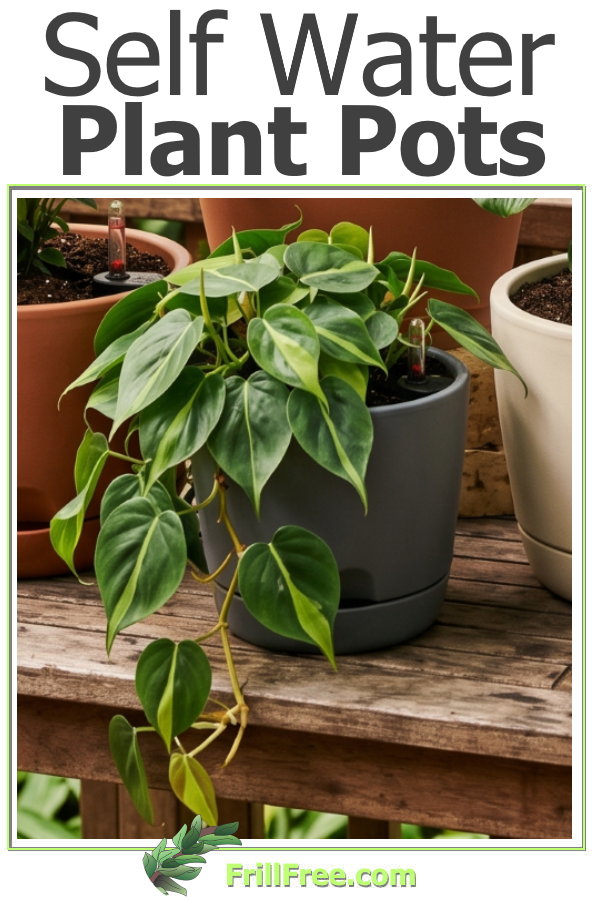
Self-watering plant pots are containers designed to supply water to plants gradually, helping keep soil moisture more consistent than traditional pots.
Most use a reservoir at the bottom and a wick, soil column, or capillary system that allows the plant to draw up water as needed.
You can make your own with a piece of nylon stocking going through the drain hole into the soil, which draws up the moisture from a saucer below.
Even clay pots work in the same way, if you have several plants in a bussing tub to form the reservoir.
This ingenious design can reduce how often you need to water and can help prevent the repeated cycle of bone-dry soil followed by overwatering, which stresses many tropical houseplants.
Moisture management in containers is critical because potted plants dry out faster than plants in the ground, and self-watering systems mitigate that challenge.
One of the biggest advantages of self-watering pots is convenience. They are especially useful for busy people, frequent travelers, and anyone who tends to forget regular watering.
Instead of watering every day or two in warm conditions, you may only need to refill the reservoir occasionally, depending on the plant, pot size, light, and season. This can make plant care more predictable and less time-consuming.
Consistent moisture is beneficial for many plants grown in containers.
These pots can also improve plant health when used correctly. Even moisture supports steady root function, nutrient uptake, and growth.
Herbs, leafy greens, tropical houseplants, and many flowering plants often grow well in self-watering containers because they prefer soil that stays lightly and evenly moist.
They are popular for indoor gardening and small-space edible growing, including basil, mint, lettuce, and parsley. Many container plants benefit from consistent watering, particularly in hot weather.
Self-watering pots are not ideal for every plant. Species that prefer drying out between waterings, such as many succulents, cacti, and some orchids, may struggle if the potting mix stays too damp.
Excess moisture can lead to root rot, fungus gnats, and poor aeration if the soil is too dense.
To avoid problems, it is important to use a light, well-draining potting mix rather than heavy garden soil. Think aggregate, rather than manure.
Match watering style and compost structure to the needs of the plant.
Choosing the right self-watering pot means looking at reservoir size, drainage features, material, and ease of monitoring the water level.
Some models include overflow holes to prevent waterlogging outdoors after rain, while others have water level indicators that simplify maintenance.
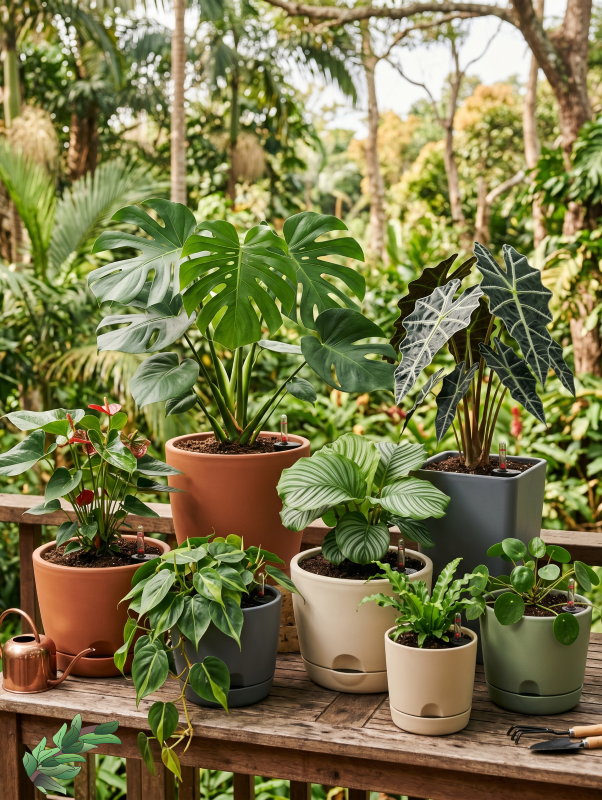 Grow all kinds of tropical plants in self watering pots for a lush and beautiful collection
Plastic pots are lightweight and retain moisture well, while ceramic
styles may offer a more decorative look. For edible plants, food-safe
materials are a smart choice. It is also helpful to clean the reservoir
periodically to prevent mineral buildup or algae.
Self-watering
plant pots are a practical solution for anyone who wants healthier
container plants with less daily effort. They promote more stable
moisture, reduce how often you water, and can be excellent for many
common houseplants and kitchen herbs.
Success depends on choosing suitable plants and using the right potting mix.
When matched well, self-watering pots make indoor and patio gardening easier, more reliable, and more enjoyable.
If you have a large collection of plants in containers, maybe self watering ones will be something to try on those plants that need frequent watering.
 Jacki Cammidge
AUTHOR BIO
Jacki Cammidge is a Certified Horticulturist who helps gardeners grow more with less through low-input, budget-friendly gardening and propagation. She has gardened her whole life, served as head propagator at a wholesale nursery, and handled thousands of rose and juniper cuttings.
Readers can find her at Frill Free on Facebook and Pinterest. Her frill-free approach was forged in northern BC, where horse manure, leaves, salvaged sawdust, and a deer-tested raised bed built her garden from scratch.