- Frill Free Horticulture
- Seed Planting
- Seed Germination Planting Guide
Jacki Cammidge is a Certified Horticulturist specializing in frugal, low-input gardening and propagation, with lifelong hands-on experience and years as a wholesale nursery head propagator.
Seed Germination Planting Guide
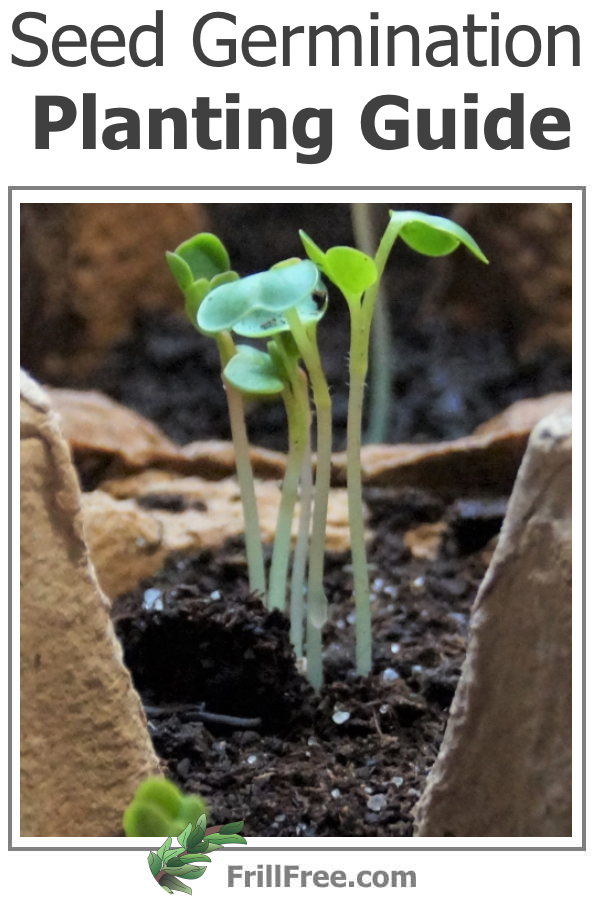
The most important part of a seedlings life is the germination process. If you don't get that right, you won't get a crop. Here's a seed germination planting guide to help.
Fahrenheit Planting Guide -
Need Celsius?
Here’s a simple planting guide by crop and season, based on soil temperature for germination.
Cool-season crops
Plant when soil is 40–75°F
Best for early spring or fall
- Lettuce: plant at 40°F+, best at 60–75°F
- Spinach: plant at 35°F+, best at 45–75°F
- Peas: plant at 40°F+, best at 45–75°F
- Radishes: plant at 40°F+, best at 50–85°F
- Carrots: plant at 45°F+, best at 55–75°F
- Beets: plant at 45°F+, best at 50–85°F
- Kale: plant at 40°F+, best at 45–85°F
- Cabbage: plant at 40°F+, best at 50–85°F
- Broccoli: plant at 40°F+, best at 50–85°F
- Cauliflower: plant at 40°F+, best at 50–85°F
- Onions: plant at 35°F+, best at 55–75°F
- Parsley: plant at 40°F+, best at 50–70°F
- Cilantro: plant at 40°F+, best at 50–75°F
- Dill: plant at 40°F+, best at 60–70°F
Warm-season crops
Plant when soil is 60–95°F
Best for late spring to summer
- Tomatoes: plant at 50°F+, best at 70–85°F
- Peppers: plant at 60°F+, best at 75–85°F
- Eggplant: plant at 60°F+, best at 75–90°F
- Beans: plant at 60°F+, best at 70–85°F
- Corn: plant at 50°F+, best at 65–85°F
- Cucumbers: plant at 60°F+, best at 70–95°F
- Squash: plant at 60°F+, best at 70–95°F
- Pumpkins: plant at 60°F+, best at 70–95°F
- Melons: plant at 65°F+, best at 80–95°F
- Okra: plant at 65°F+, best at 80–95°F
- Basil: plant at 60°F+, best at 70–85°F
Simple season rule
- Early spring: peas, spinach, lettuce, onions, radishes
- Mid-spring: carrots, beets, broccoli, cabbage, kale
- After frost and warm soil: beans, corn, cucumbers, squash
- When soil is fully warm: tomatoes, peppers, eggplant, melons, okra, basil
Celsius Planting Guide
Here’s the same planting guide converted to Celsius.
Here’s a simple planting guide by crop and season, based on soil temperature for germination.
Cool-season crops
Plant when soil is 4–24°C
Best for early spring or fall
- Lettuce: plant at 4°C+, best at 16–24°C
- Spinach: plant at 2°C+, best at 7–24°C
- Peas: plant at 4°C+, best at 7–24°C
- Radishes: plant at 4°C+, best at 10–29°C
- Carrots: plant at 7°C+, best at 13–24°C
- Beets: plant at 7°C+, best at 10–29°C
- Kale: plant at 4°C+, best at 7–29°C
- Cabbage: plant at 4°C+, best at 10–29°C
- Broccoli: plant at 4°C+, best at 10–29°C
- Cauliflower: plant at 4°C+, best at 10–29°C
- Onions: plant at 2°C+, best at 13–24°C
- Parsley: plant at 4°C+, best at 10–21°C
- Cilantro: plant at 4°C+, best at 10–24°C
- Dill: plant at 4°C+, best at 16–21°C
Warm-season crops
Plant when soil is 16–35°C
Best for late spring to summer
- Tomatoes: plant at 10°C+, best at 21–29°C
- Peppers: plant at 16°C+, best at 24–29°C
- Eggplant: plant at 16°C+, best at 24–32°C
- Beans: plant at 16°C+, best at 21–29°C
- Corn: plant at 10°C+, best at 18–29°C
- Cucumbers: plant at 16°C+, best at 21–35°C
- Squash: plant at 16°C+, best at 21–35°C
- Pumpkins: plant at 16°C+, best at 21–35°C
- Melons: plant at 18°C+, best at 27–35°C
- Okra: plant at 18°C+, best at 27–35°C
- Basil: plant at 16°C+, best at 21–29°C
Simple season rule
- Early spring: peas, spinach, lettuce, onions, radishes
- Mid-spring: carrots, beets, broccoli, cabbage, kale
- After frost and warm soil: beans, corn, cucumbers, squash
- When soil is fully warm: tomatoes, peppers, eggplant, melons, okra, basil
Extra tip
Air can feel warm while soil is still cold. For best germination, check soil temperature 2.5–5 cm deep in the morning.
You might like these
Seed Planting - growing your own vegetables from seeds
Seed Planting is a time honored way of growing your own vegetables; don't worry, it's not that hard...
Hot Bed - how to start your seedlings early
A Hot Bed gives you a jump on the season for starting vegetable seeds; learn how to use compost for bottom heat and get started early...
Top Ten Myths about Organic Garden Seeds - the real dirt
The Top Ten Myths about Organic Garden Seeds; get the real dirt about some nonsense and misconceptions...
 Jacki Cammidge
AUTHOR BIO
Jacki Cammidge is a Certified Horticulturist who helps gardeners grow more with less through low-input, budget-friendly gardening and propagation. She has gardened her whole life, served as head propagator at a wholesale nursery, and handled thousands of rose and juniper cuttings.
Readers can find her at Frill Free on Facebook and Pinterest. Her frill-free approach was forged in northern BC, where horse manure, leaves, salvaged sawdust, and a deer-tested raised bed built her garden from scratch.